September represents the ultimate “shoulder season” for global travel
In the Northern Hemisphere, summer crowds dissipate and peak-season pricing drops, yet daylight hours remain long and oceans retain their absorbed summer heat. In the Southern Hemisphere, the arrival of spring brings wildflower blooms and rising temperatures.
Strategic September travel focuses on leveraging these shifting conditions. High-value itineraries this month target regions undergoing agricultural harvests, destinations experiencing specific wildlife migrations, and areas where extreme summer heat finally breaks to allow for outdoor exploration.
Chapter Trail
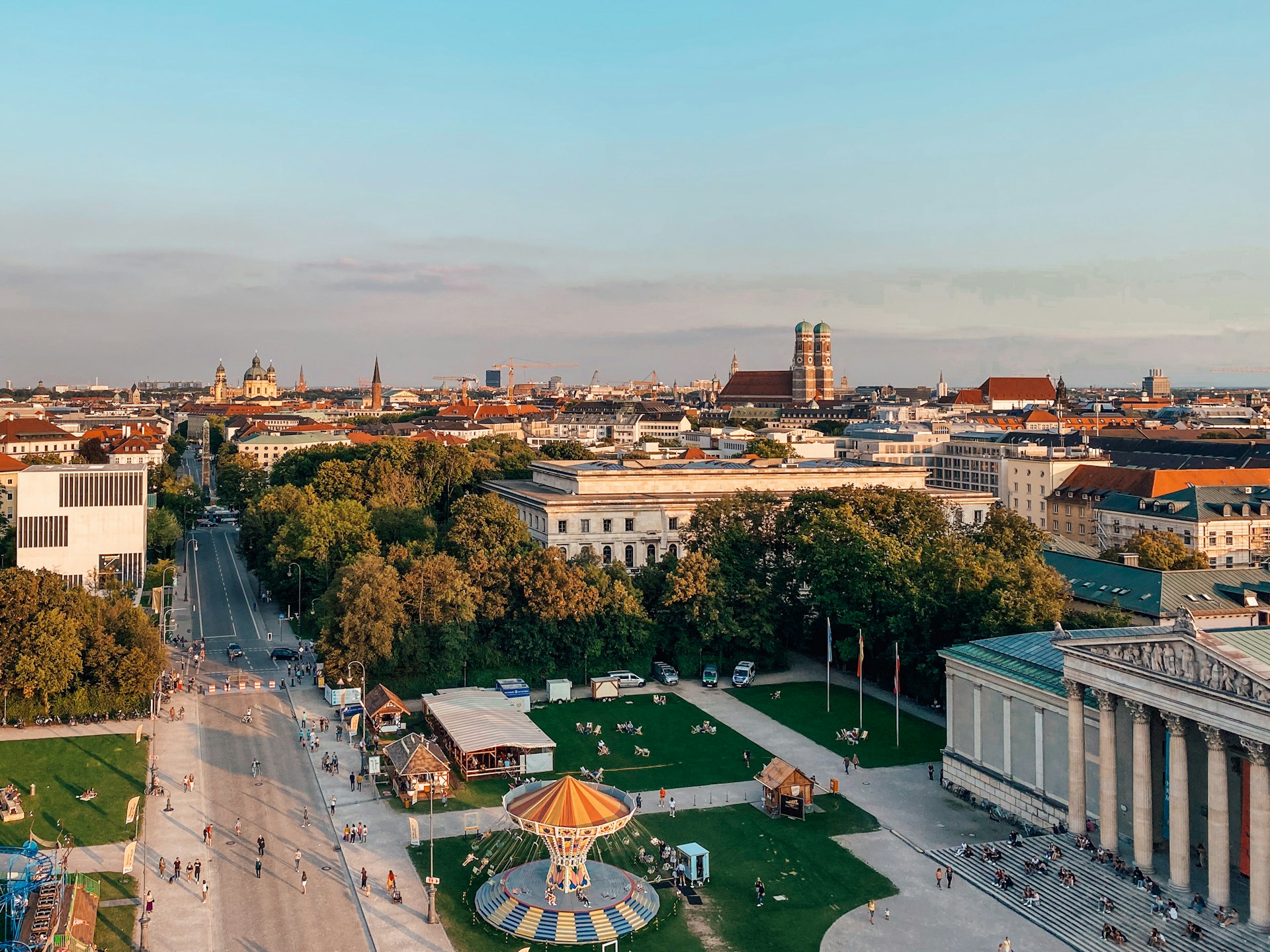
Munich & Bavaria, Germany
Photo by ian kelsall on Unsplash
Why it's perfect
Despite its name, the vast majority of Oktoberfest takes place in September. Munich hosts the world’s largest folk festival, drawing millions to the Theresienwiese fairgrounds for Bavarian beer, traditional music, and regional cuisine. Beyond the city, the Bavarian Alps offer crisp, clear conditions for early autumn hiking.
Weather
Cool and mild; 9°C to 19°C (48°F–66°F).
Where to go
The Oktoberfest tents in Munich and Neuschwanstein Castle in the alpine foothills.
Activities/Highlights
Experiencing the festival atmosphere in a traditional dirndl or lederhosen and exploring the English Garden.
Where to stay
Central Munich (book months in advance) or a quieter alpine lodge in Garmisch-Partenkirchen.
Food to try
Weisswurst (traditional veal sausage) and massive, freshly baked pretzels.
Average cost
Very High (due to festival pricing; $250–$500 per day).
Tuscany, Italy
Photo by Wolfgang Hasselmann on Unsplash
Why it's perfect
September triggers the Vendemmia (grape harvest) across Italy’s most famous wine region. The aggressive heat of August breaks, the summer tourist rush ends, and the landscape transitions into autumn colors. Local villages host specialized food and wine festivals to celebrate the harvest.
Weather
Warm and comfortable; 15°C to 27°C (59°F–81°F).
Where to go
The Chianti wine route, Siena, and the medieval towers of San Gimignano.
Activities/Highlights
Touring historic vineyards, participating in wine tastings, and cycling through the rolling hills of the Val d’Orcia.
Where to stay
A restored agriturismo (working farm or estate) in the countryside.
Food to try
A restored agriturismo (working farm or estate) in the countryside.
Average cost
Moderate to High ($150–$300 per day).
Hermanus, South Africa
Photo by David Dibert on Pexels
Why it's perfect
September is the absolute peak of the Southern Right Whale migration. Hermanus, located on the Western Cape, is recognized as the best land-based whale-watching destination in the world. The animals breach and nurse their calves just meters from the coastal cliffs.
Weather
Crisp spring weather; 11°C to 19°C (52°F–66°F).
Where to go
The Hermanus Cliff Path and nearby Walker Bay.
Activities/Highlights
Watching whales from the shoreline, sea kayaking, and exploring the neighboring Hemel-en-Aarde wine valley.
September brings the annual elk rut (mating season). The haunting sound of bugling bull elk echoes through the valleys, providing one of North America’s premier wildlife spectacles. Simultaneously, the heavy summer road traffic disappears, and the aspens begin to turn vibrant yellow.
Weather
Cold mornings, crisp days; 2°C to 17°C (36°F–63°F). Expect early snowfalls.
Where to go
Mammoth Hot Springs (for elk viewing) and the Lamar Valley for wolves and bison.
Activities/Highlights
Early morning wildlife tracking and hiking geothermal basins without the summer crowds.
Where to stay
In-park lodges (which remain open until October) or gateway towns like West Yellowstone.
Food to try
Bison burgers and locally sourced huckleberry preserves.
The Algarve provides a distinct late-summer advantage: the Atlantic Ocean reaches its warmest temperature of the year after absorbing three months of summer sun. By September, European school holidays end, clearing the beaches of heavy crowds while the weather remains flawlessly suited for swimming.
Weather
Warm and sunny; 18°C to 27°C (64°F–81°F).
Where to go
The limestone cliffs of Ponta da Piedade and the sea cave of Benagil.
Activities/Highlights
Coastal boat tours, surfing in Sagres, and relaxing on uncrowded beaches.
Where to stay
Lagos for a vibrant town center or a secluded villa in the coastal hills.
Food to try
Frango Assado (peri-peri grilled chicken) and Cataplana de Marisco (seafood stew).
September introduces the Australian spring. The oppressive heat of the outback summer has not yet arrived, making midday outdoor exploration possible. Desert wildflowers begin to bloom, adding rare color to the red dirt landscape surrounding the iconic monolith.
Weather
Warm days, cool nights; 12°C to 28°C (54°F–82°F).
Where to go
The base of Uluru and the domes of Kata Tjuta (The Olgas).
Activities/Highlights
Walking the Uluru base trail at sunrise and viewing the Field of Light art installation after dark.
Where to stay
The resort complex at Yulara, which offers options ranging from luxury wilderness tents to standard hotels.
Food to try
Barramundi (native Australian fish) and bush tucker tasting plates.
Average cost
High ($200–$350 per day).
Conclusion
Photo by Steven Wei on Unsplash
September offers a highly advantageous travel window, balancing excellent weather with lower peak-season costs. Targeting destinations centered around specific September events—such as the grape harvests of Europe, the whale migrations of the South Atlantic, or the crisp wildlife viewing in North America—ensures maximum value and avoids the friction of midsummer travel.
Mark loves traveling with his partner and their four dogs to different beaches locally in the Philippines. He plans to revisit South Korea and Singapore soon, then finally visit Japan after that.
Mark Ching
Mark loves traveling with his partner and their four dogs to different beaches locally in the Philippines. He plans to revisit South Korea and Singapore soon, then finally visit Japan after that.
Post
Twit
Link
Mark Ching
Mark loves traveling with his partner and their four dogs to different beaches locally in the Philippines. He plans to revisit South Korea and Singapore soon, then finally visit Japan after that.
Post
Twit
Link
Up next
Here you can find some amazing travel stories, to tickle your travel bone or just to dream away. Sometimes we travel without moving.