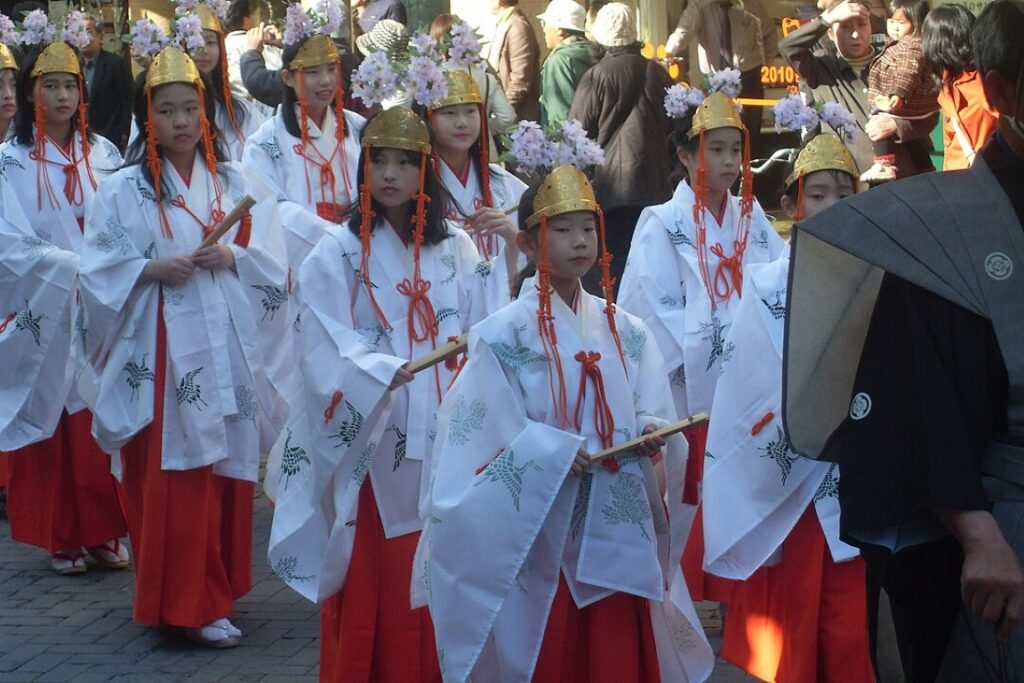
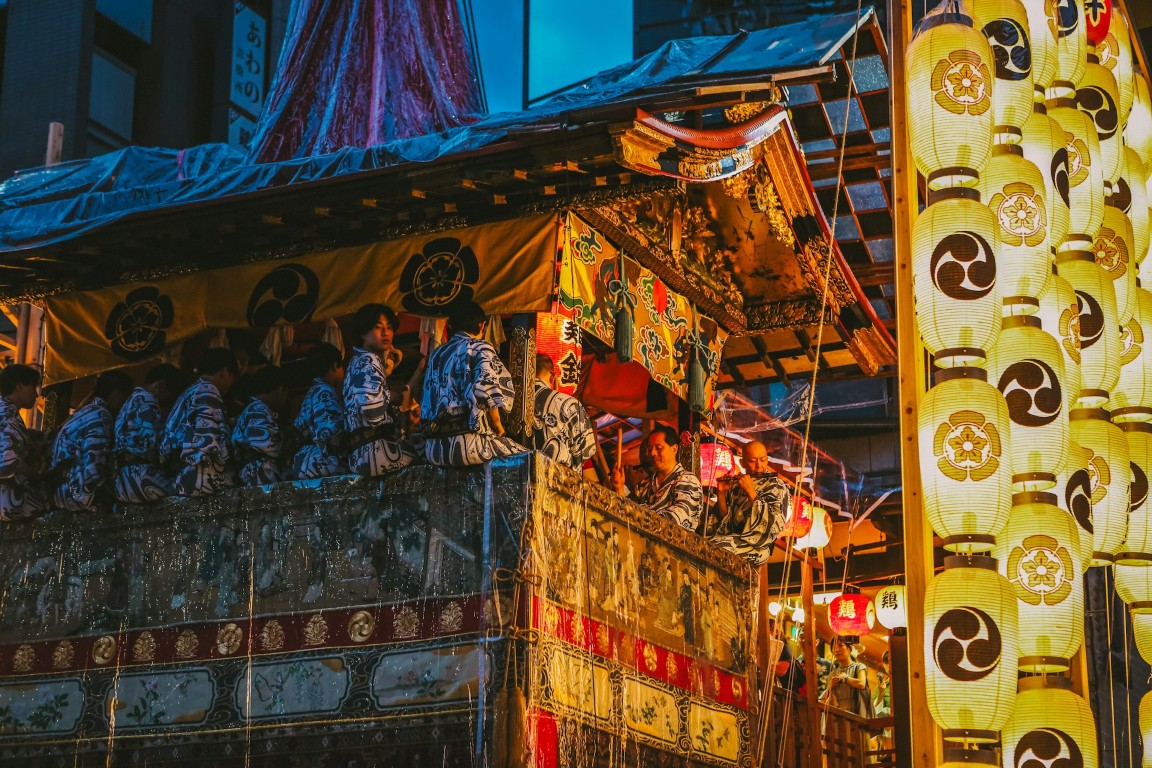
In Japan, a festival is called a Matsuri. It is a word that invokes images of thundering taiko drums, the smell of fried noodles, and the sight of massive wooden floats navigating narrow streets.
Japanese festivals are deeply rooted in Shinto spirituality, serving as a way to entertain the Kami (gods) and pray for bountiful harvests or protection from plagues.
For the traveler, a Matsuri is the best way to see the normally reserved Japanese society let loose. The energy is infectious, the craftsmanship is exquisite, and the scale is often overwhelming. Here are five festivals that capture the essence of the Land of the Rising Sun.
Chapter Trail
Gion Matsuri
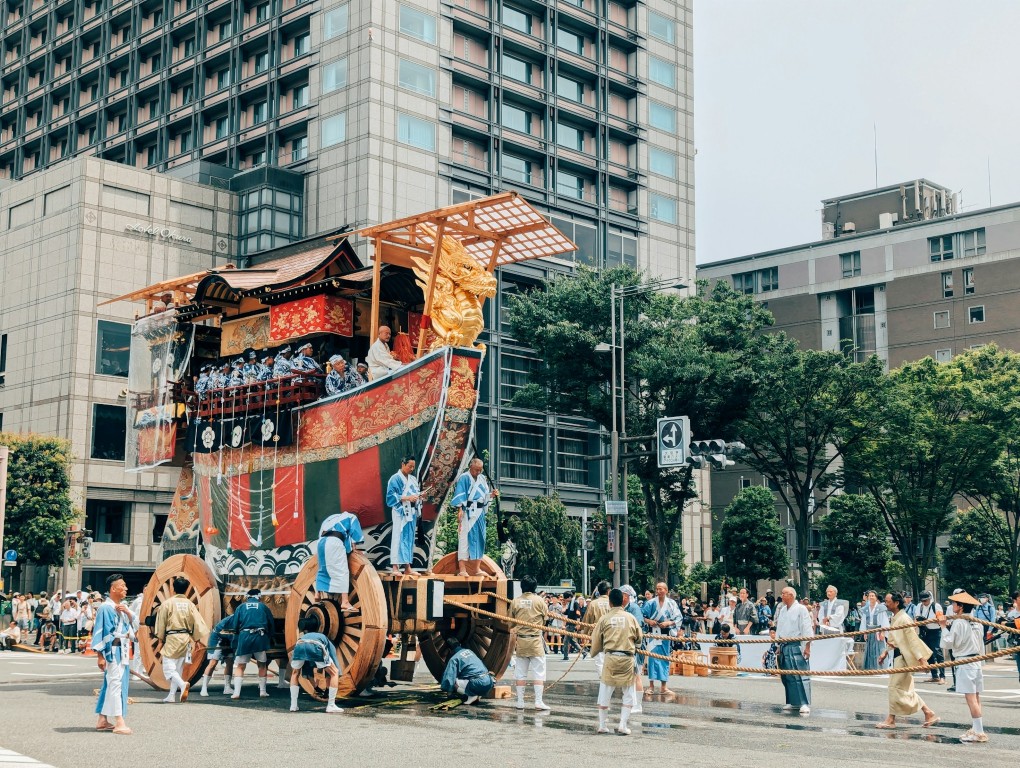
Dating back to 869 AD, Gion Matsuri was originally a religious ritual to appease the gods during a plague. Today, it is Japan’s most famous festival. It takes over the ancient capital of Kyoto for the entire month of July, transforming the city’s modern downtown into a living museum of medieval pageantry.
Where to enjoy
Kyoto. Specifically the Shijo-Karasuma and Gion districts.
When
Throughout July. The main events are the Yoiyama (street parties) on July 14–16 and the Yamaboko Junko (Grand Parade) on July 17.
How to get there
Take the Shinkansen (Bullet Train) to Kyoto Station. From there, take the Karasuma Subway Line to Shijo Station, which puts you right in the heart of the action.
Highlights
- Yamaboko Junko: A procession of 32 magnificent floats, some weighing up to 12 tons and reaching 25 meters tall. They are assembled without a single nail.
- Yoiyama: The three nights leading up to the parade. The streets are closed to traffic, lined with food stalls (yatai), and locals dress in summer kimonos (yukata).
- Byobu Matsuri: Local merchant houses open their doors to display their family heirlooms and folding screens (byobu) to the public.
Where to stay
- Hotel Granvia Kyoto (Located inside the station, ultra-convenient)
- Cross Hotel Kyoto (Located near the Gion district)
- Machiya Rentals: Renting a traditional wooden townhouse is the most atmospheric way to stay in Kyoto.
What to eat
- Hamo: Pike Conger eel. It is the signature fish of the Gion Matsuri season, usually served blanched with plum paste.
- Yatsuhashi: Cinnamon-flavored dough sweets (a classic Kyoto souvenir).
Aomori Nebuta Matsuri
While Kyoto’s festivals are elegant and slow, Aomori’s is a riot of light and motion. Held in the northern tip of the main island, this festival features enormous, glowing lantern floats depicting fierce warriors and mythical beasts, pushed by human strength alone.
Where to enjoy
Aomori City, Aomori Prefecture.
When
August 2 to August 7. The nightly parades happen from Aug 2–6, with a daytime parade and fireworks on the final day.
How to get there
Take the Tohoku Shinkansen from Tokyo to Shin-Aomori Station (approx. 3 hours).
Highlights
- The Nebuta Floats: Massive structures made of washi paper over wire frames, illuminated from the inside with thousands of lights. They are vividly colored and undeniably impressive.
- The Haneto Dancers: Unlike other festivals where you just watch, here you can join! Anyone can participate as a Haneto dancer as long as they buy or rent the traditional costume.
- The Chant: The rhythmic shouting of “Rassera! Rassera!” echoing through the night.
Where to stay
Accommodation in Aomori City sells out almost a year in advance.
- Hotel JAL City Aomori (Central)
- Alternative: Stay in nearby Hirosaki or Hachinohe and take the train in for the evening.
What to eat
- Nokke Don: A DIY seafood rice bowl available at the Furukawa Fish Market. You buy tickets and trade them for fresh sashimi toppings at various stalls.
- Aomori Apples: The region produces Japan’s best apples; try the apple pies or fresh cider.
Sapporo Snow Festival (Yuki Matsuri)
Japan creates art even out of ice. The Sapporo Snow Festival transforms the city into a gallery of frozen architecture. Massive sculptures, some the size of buildings, are carved from snow and ice, drawing millions of visitors to the northern island of Hokkaido.
Where to enjoy
Sapporo, Hokkaido. The main site is Odori Park.
When
Early February. (Usually for one week).
How to get there
Fly to New Chitose Airport (CTS). Take the rapid train (35 mins) to Sapporo Station.
Highlights
- Odori Site: The home of the massive snow sculptures (often replicas of famous world architecture or pop culture icons).
- Susukino Site: Located in the entertainment district, this area features intricate crystal-clear ice sculptures.
- Projection Mapping: At night, light shows are projected onto the massive snow structures.
Where to stay
- Sapporo Grand Hotel (Connected to the underground walkway, essential in freezing weather)
- Mercure Sapporo (Located in Susukino)
- Tip: Book early and bring thermal wear; temperatures are consistently below freezing.
What to eat
- Soup Curry: A spicy, watery curry loaded with vegetables and chicken leg, native to Sapporo.
- Genghis Khan (Jingisukan): Grilled mutton and vegetables cooked on a convex skillet.
- Miso Ramen: Sapporo is the birthplace of miso-based ramen (try the “Ramen Alley”).
Awa Odori
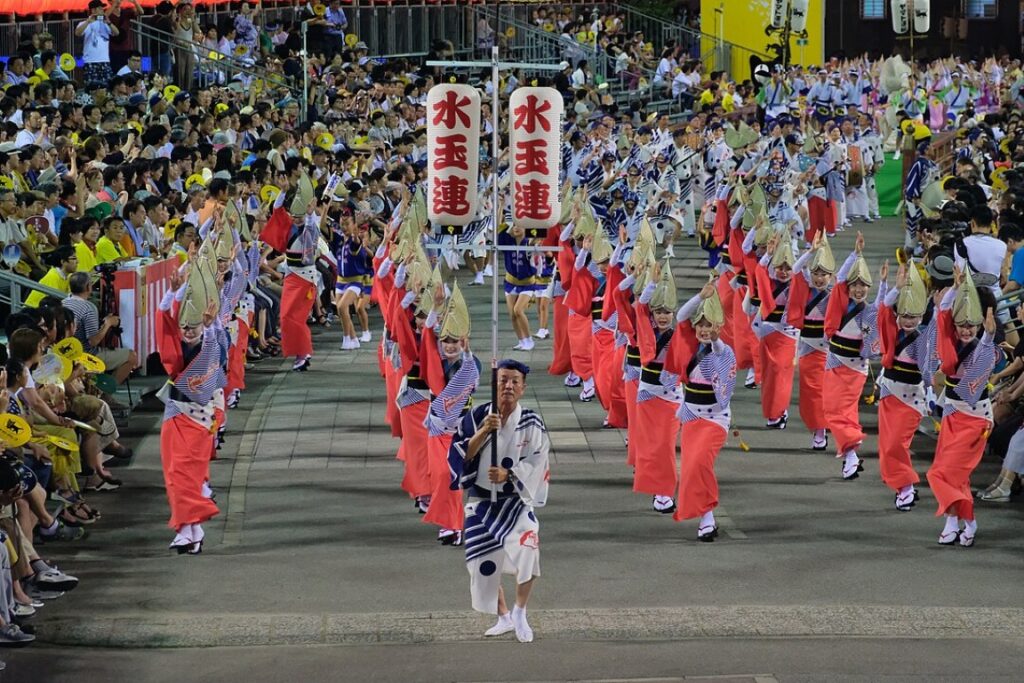
“The dancing fool and the watching fool are both fools, so why not dance?” This is the chant of Awa Odori, the largest dance festival in Japan. It is a part of Obon, the Buddhist season of honoring ancestors. The energy here is raw and chaotic in the best possible way.
Where to enjoy
Tokushima City, Shikoku Island.
When
August 12 to 15.
How to get there
Take a highway bus from Osaka or Kobe (approx. 2.5 hours) across the Akashi Kaikyo Bridge. Alternatively, fly to Tokushima Airport.
Highlights
- The Ren: Choreographed dance troupes (Ren) weave through the city streets. Some are wild and energetic (men’s dance), others are elegant and precise (women’s dance with straw hats).
- Street Chaos: Beyond the paid spectator stands, the entire city center becomes a dance floor. Spontaneous dance circles form constantly.
- Shamisen and Drums: The relentless, hypnotic rhythm of traditional instruments that plays non-stop for four days.
Where to stay
Tokushima has very few hotels.
- JR Hotel Clement Tokushima (The best in town)
- Alternative: Many travelers stay in Takamatsu (1 hour away by train) or take the late bus back to Osaka.
What to eat
- Tokushima Ramen: A rich, salty pork-bone soup usually topped with raw egg and sweet pork belly.
- Sudachi Chicken: Chicken grilled with the local sudachi citrus fruit.
Takayama Matsuri
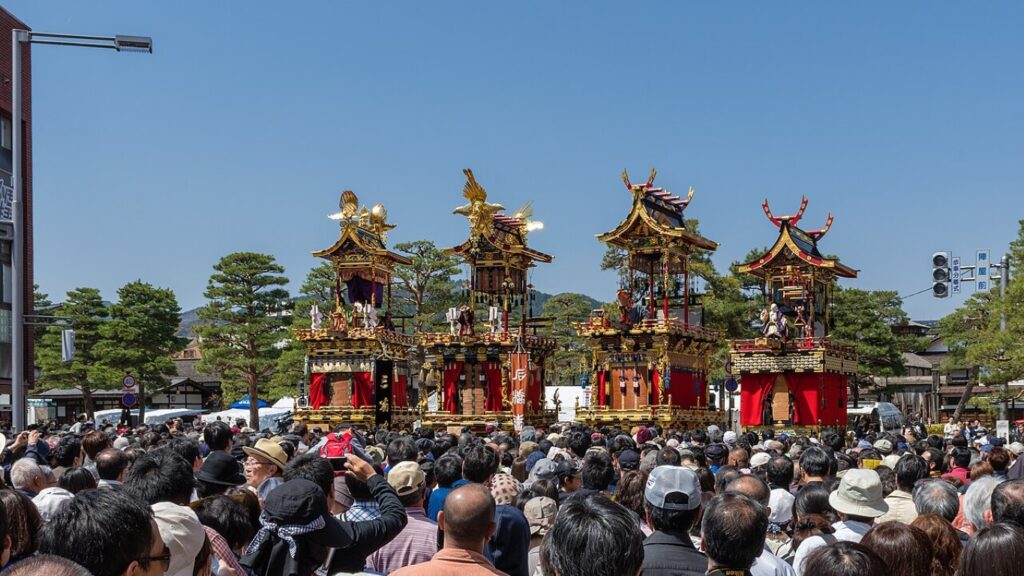
Often cited as one of Japan’s three most beautiful festivals, Takayama Matsuri is held in a preserved Edo-period town in the Japanese Alps. It is much quieter and more refined than Awa Odori or Nebuta. The festival focuses on exquisite craftsmanship and mechanical puppetry.
Where to enjoy
Takayama, Gifu Prefecture.
When
Held twice a year: Spring (April 14–15) and Autumn (October 9–10).
How to get there
Take the JR Hida Limited Express (Wide View Hida) from Nagoya Station. The train ride itself is scenic, winding through mountains and gorges.
Highlights
- Yatai Floats: These are mobile museums. They are heavily gilded with gold, intricate wood carvings, and beautiful tapestries.
- Karakuri Ningyo: Mechanical marionettes atop the floats perform complex movements (like serving tea or doing gymnastics) using hidden strings manipulated by masters inside the float.
- The Night Festival: In the evening, the floats are adorned with traditional paper lanterns and parade through the darkened old town.
Where to stay
- Honjin Hiranoya Kachoan (A luxury traditional Ryokan with hot springs)
- Takayama Green Hotel
- Temple Stays: Some local temples offer accommodation (Shukubo).
What to eat
- Hida Beef: High-grade wagyu beef, often eaten as sushi or grilled on a magnolia leaf (Hoba Miso).
- Mitarashi Dango: Grilled rice dumplings with soy sauce (Takayama’s version is savory, not sweet).
Conclusion
Japan’s festival calendar is a testament to its ability to preserve the past while celebrating the present. Whether you are shivering in admiration of a snow sculpture in Sapporo or sweating to the rhythm of drums in the Shikoku summer, attending a Matsuri offers a glimpse into the communal heart of Japan. These events are crowded, loud, and intense, providing a perfect counterpoint to the quiet zen gardens and silent temples the country is famous for.
Plan your next dream trip with one of our hand-picked, highly experienced, licensed, and insured Local In-destination Experts!